

Chiropractic Adjustments in San Diego
Chiropractic adjustments are one of the most recognized tools used in chiropractic care. At Biophysics Chiropractic, adjustments are incorporated when appropriate as part of an individualized approach designed to support movement, spinal function, mobility, posture, and overall musculoskeletal health.
- Evaluation-first care
- Family-friendly practice
- Personalized to you
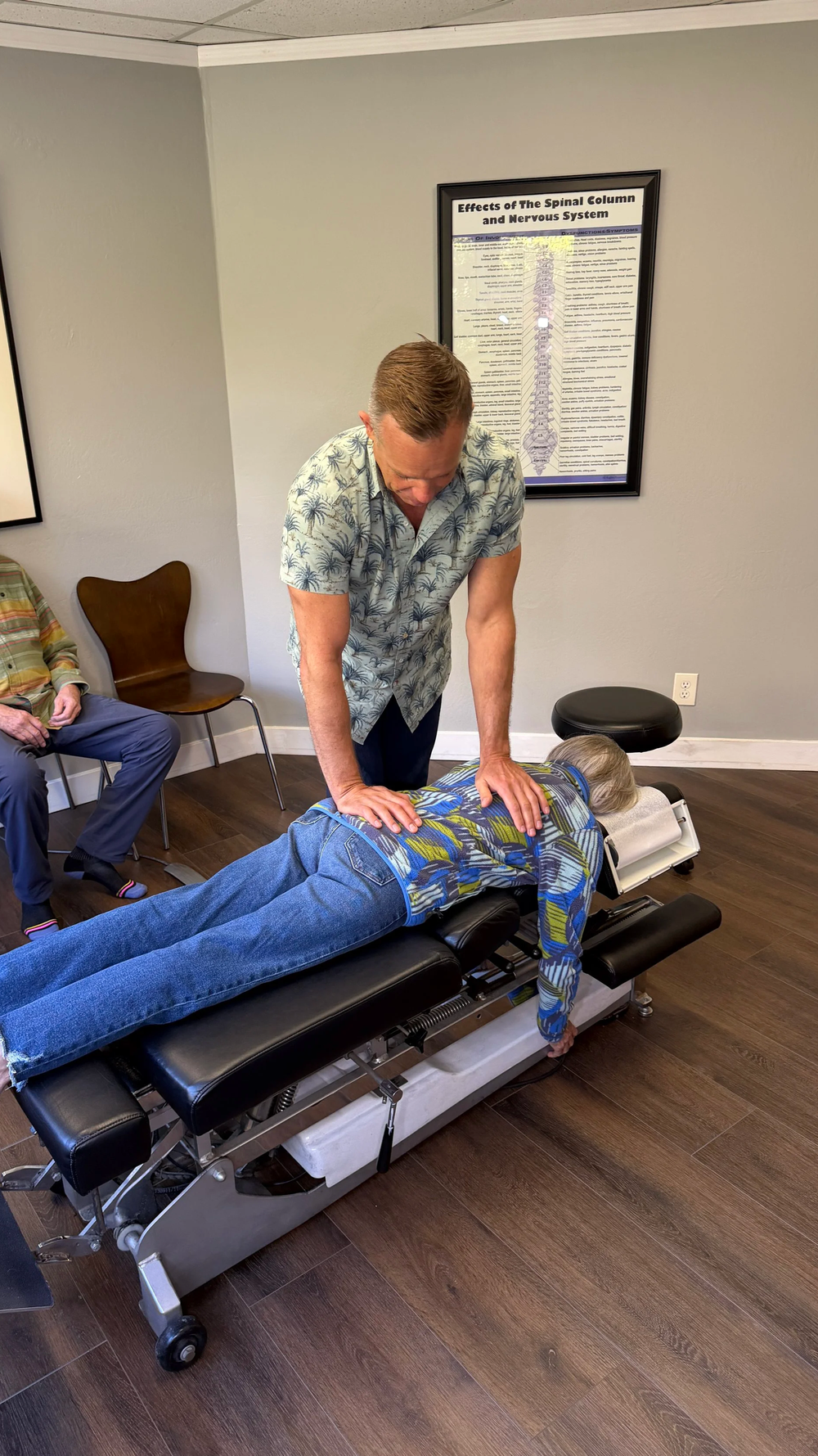
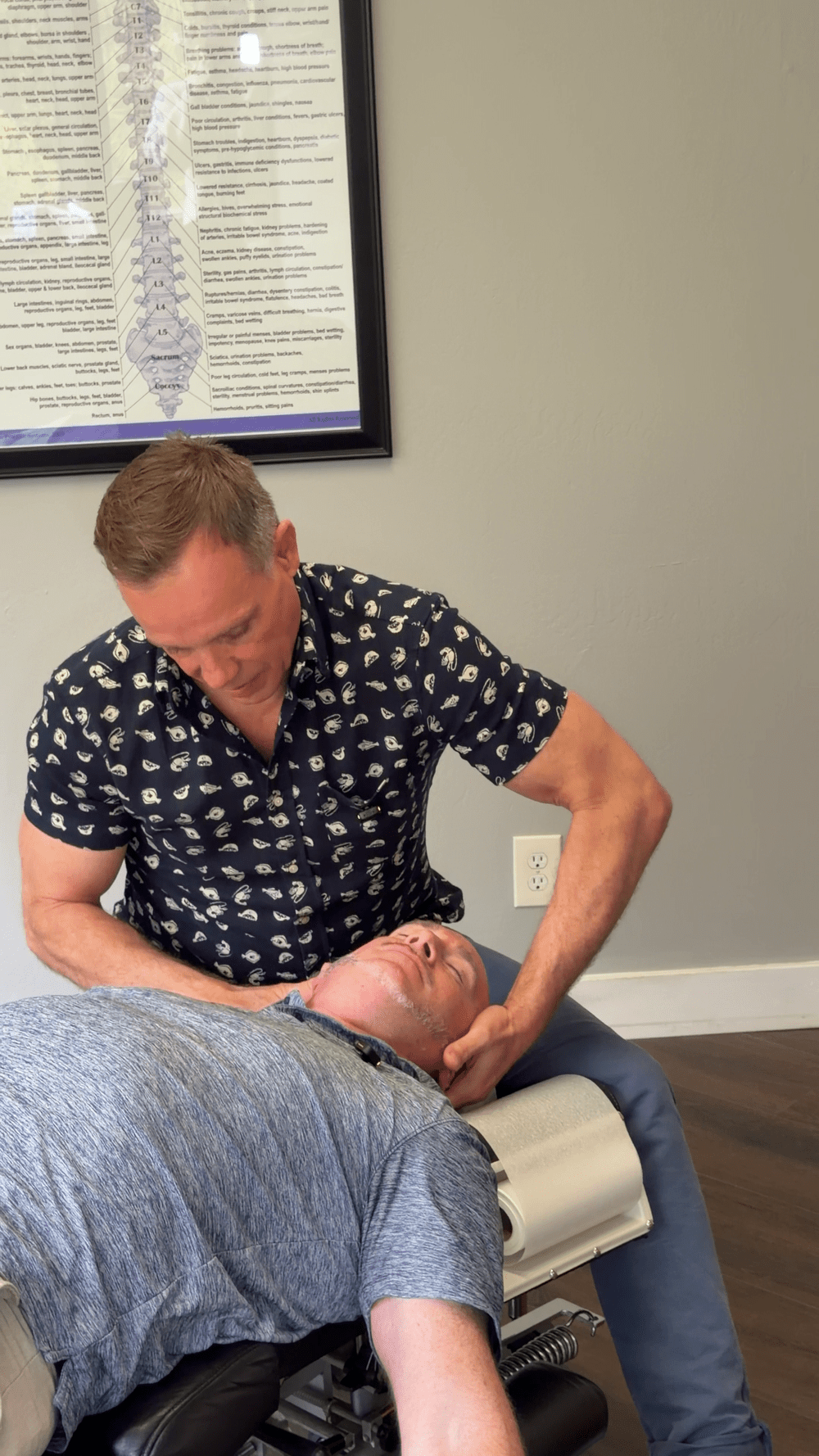
What Is a Chiropractic Adjustment?
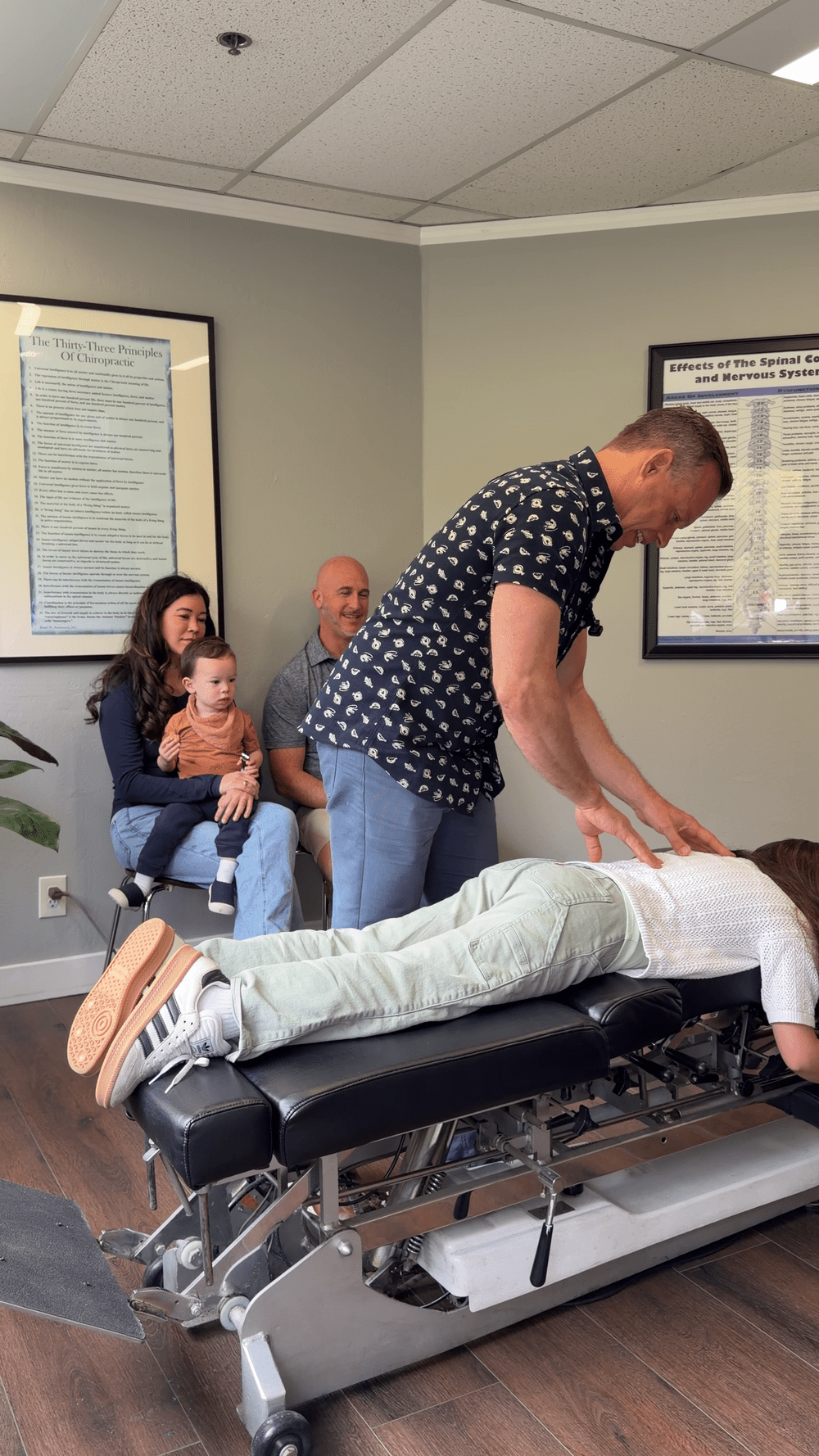
A chiropractic adjustment is a controlled technique that chiropractors may use to influence the movement and function of joints, particularly the joints of the spine. You may also hear it called a spinal adjustment or spinal manipulation.
Depending on the technique, the patient, the area being treated, and the clinical findings, a chiropractor may use their hands or a specialized instrument. Not every chiropractic adjustment looks or feels the same.
It also helps to know that an adjustment is only one component of chiropractic care. It can be combined with evaluation, posture analysis, corrective care, mobility recommendations, exercise, and other appropriate strategies. Explore the full picture on our chiropractic care overview.
Why Are Chiropractic Adjustments Used?
Chiropractors use adjustments with specific goals in mind. Depending on the individual, an adjustment may help support:
Joint mobility
Helping joints move through their natural range more freely.
Spinal movement
Supporting how the segments of the spine move together and relate to one another.
Comfortable movement
Making everyday motions like turning, bending, and reaching feel more natural.
Musculoskeletal function
Supporting how joints, muscles, and connective tissue work as a system.
Range of motion
Supporting the available motion in areas that feel restricted.
Postural mechanics
Contributing to how the body holds and organizes itself throughout the day.
Movement patterns matter too. Recommendations vary by person and are based on an evaluation, not a one-size-fits-all model.
What Happens During a Chiropractic Adjustment?
If you have never visited a chiropractor, here is the general process. Details vary by technique and by person, and you are always welcome to ask questions along the way.
Evaluation
Your chiropractor first considers your health history, symptoms, movement, posture, and relevant examination findings.
Positioning
You are positioned appropriately for the area being addressed and the technique being used.
Adjustment
A controlled movement or force may be applied to a specific joint.
Reassessment
Your chiropractor may reassess motion, comfort, or movement following the adjustment.
It starts with understanding you
The adjustment is rarely the first step. Care begins with a conversation and an assessment, so that any recommendation is grounded in what your chiropractor actually finds.
Do Chiropractic Adjustments Hurt?
Many people tolerate chiropractic adjustments comfortably, although individual experiences vary. During an adjustment, some people notice pressure, stretching, or a sense of movement. Afterward, some feel temporary soreness, a little like after a workout.
The most important thing is to communicate. Share your comfort level and any concerns with your chiropractor before and during care. Different techniques can sometimes be considered based on your preferences and clinical circumstances, so you do not have to simply put up with something that feels wrong.
Why Do Chiropractic Adjustments Sometimes Make a Popping Sound?
The familiar popping or cracking sound linked to some adjustments is generally related to changes within a joint, including the release or formation of tiny gas bubbles in the joint fluid. Think of it as a close cousin of knuckle cracking.
Good to know
- An adjustment does not have to create a popping sound to be effective.
- The sound itself is not the objective of chiropractic care.
- Different chiropractic techniques may produce different sensations or sounds, and some produce none at all.
How Do Chiropractic Adjustments Fit Into Posture-Focused Care?
Posture and spinal mechanics involve more than individual joints. They reflect how your spine, muscles, and daily habits work together, which is why posture and chiropractic care are best considered as a whole.
At Biophysics Chiropractic, chiropractic adjustments may be one component of a larger care strategy based on your evaluation and goals. Depending on your findings, that strategy can include:
- Posture analysis. Learn more about our posture analysis approach
- Corrective care planning
- Mobility work
- Exercise or movement recommendations
- Ergonomic education
- Ongoing reassessment
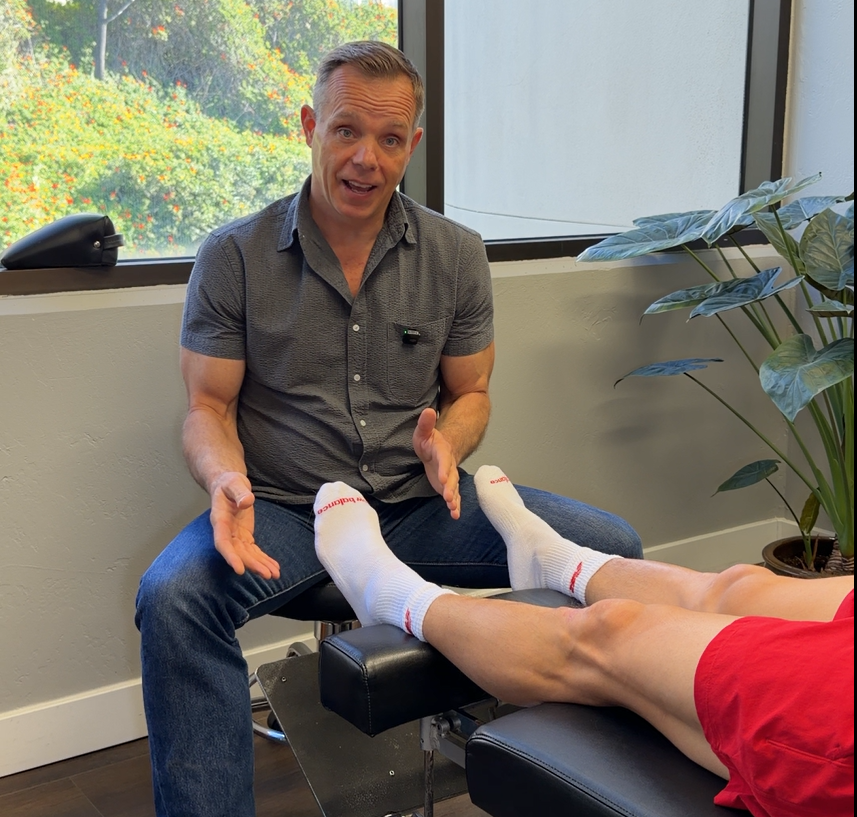
Are Chiropractic Adjustments the Same as Corrective Chiropractic Care?
Not quite. An adjustment is a technique. Corrective chiropractic care describes a broader strategy or care plan.
Corrective care may incorporate adjustments along with additional recommendations built around posture, mobility, spinal mechanics, movement, and your individual findings. Put simply, the adjustment is one tool, and the plan explains how and when that tool is used alongside others.
To see how this works in practice, read about our corrective care plans.
Curious whether chiropractic adjustments are right for you?
A consultation is a chance to ask questions and learn what an evaluation involves, with no assumptions about what you need.
Not Every Adjustment Is the Same
Chiropractic techniques can vary based on factors such as:
Age
An infant, a teenager, and an older adult each call for a different approach.
Health history
Past injuries, conditions, and surgeries all inform what is appropriate.
Mobility
How freely you move helps determine how an area is addressed.
Comfort level
Your preferences matter, and they can shape the technique used.
Clinical findings
What your examination shows guides the recommendation.
Goals and area addressed
Your goals and the region of the body involved influence the plan.
Chiropractic care should be personalized. The goal is not to apply exactly the same adjustment to every patient, but to find what makes sense for you.
Who May Consider Chiropractic Adjustments?
Many different people seek a chiropractic evaluation to learn whether care may be appropriate for them. That does not mean everyone needs chiropractic treatment. It means an evaluation can help you find out. People who may consider one include:
- Adults with physically demanding careers
- Desk workers
- Active individuals
- Athletes
- Parents
- Older adults
- People interested in posture and mobility
- People with musculoskeletal discomfort
- Individuals seeking ongoing chiropractic care
Not sure where you fit? See who we help.
New to Chiropractic Adjustments? Here’s What to Expect
First-time patients generally begin with an evaluation, not an immediate treatment. Your first visit is about understanding you. It typically covers:
- Health history and any past injuries
- Current concerns in your own words
- Posture and movement observations
- Examination to look at relevant findings
- Your goals for care
- Recommended next steps, explained clearly
A Personalized Approach to Chiropractic Care
At Biophysics Chiropractic, we focus on understanding the individual rather than simply performing the same adjustment over and over. Chiropractic adjustments are considered within the larger picture of how the body moves and functions.
Care recommendations can take into account posture, mobility, spinal mechanics, lifestyle, individual goals, and examination findings. You will be told what we see and why we recommend it, and you are always part of the conversation.
Your care is guided by Dr. Khan, who leads Biophysics Chiropractic in San Diego.

Chiropractic Adjustments: Frequently Asked Questions
Straight answers to the questions we hear most often.
What is a chiropractic adjustment?
A chiropractic adjustment is a controlled technique a chiropractor may use to influence the movement and function of a joint, most often a joint of the spine. Depending on the technique, the area being addressed, and your clinical findings, it may be delivered by hand or with a specialized instrument. An adjustment is just one tool within chiropractic care. At Biophysics Chiropractic, it is considered alongside your health history, posture, movement, and examination findings, and it is used only when clinically appropriate for the individual.
Are chiropractic adjustments safe?
For most people, chiropractic adjustments performed by a licensed, trained chiropractor are considered a low-risk part of care. Like any hands-on health service, they are not appropriate for everyone, and rare complications have been reported. That is why a thorough evaluation comes first: your chiropractor reviews your health history, asks about your concerns, and examines you before recommending anything. Be sure to share past injuries, medical conditions, medications, and anything that has changed recently. Techniques can also be modified to suit your age, comfort level, and clinical circumstances.
Do chiropractic adjustments hurt?
Many people tolerate chiropractic adjustments comfortably, though experiences vary from person to person. During an adjustment you may notice pressure, stretching, or a sense of movement in the area. Afterward, some people feel mild, temporary soreness, similar to how muscles can feel after exercise. If you are anxious or something does not feel right, tell your chiropractor. Different techniques, including gentler and instrument-based options, may be considered depending on your preferences and clinical findings, so your comfort can guide how care is delivered.
Why do chiropractic adjustments make a popping sound?
The popping or cracking sound that sometimes accompanies a spinal adjustment is generally thought to be related to pressure changes within a joint, including the release or formation of tiny gas bubbles in the fluid that lubricates it. It is similar in principle to the sound some people hear when they crack their knuckles. The sound is a by-product, not the goal. An adjustment does not need to make any noise to be appropriate, and the absence of a pop does not mean that the adjustment did not take place.
Do all chiropractic adjustments involve cracking?
No. Many people associate chiropractic care with a cracking sound, but not every adjustment produces one. Chiropractors use a range of techniques, and some are lower-force or instrument-assisted and are generally quiet. Which technique makes sense depends on your age, comfort level, health history, the area being addressed, and your examination findings. If you would prefer to avoid the popping sensation, let your chiropractor know so that you can talk through the options that fit your needs.
How long does a chiropractic adjustment take?
The adjustment itself is often quick, sometimes only a few moments per area. A full visit usually takes longer because it may also include a conversation about how you have been feeling, movement or posture checks, the adjustment, and a brief reassessment. Your first visit is typically the longest because it includes your health history and an initial evaluation. Your chiropractor can give you a realistic idea of what to expect for your schedule when you book.
How often should you get a chiropractic adjustment?
There is no single answer. How often someone receives chiropractic adjustments depends on their individual evaluation, goals, response to care, and the chiropractor's clinical recommendations. Some people begin with more frequent visits that are spaced out over time, while others come in on a less frequent basis. Your plan should be explained to you clearly, reviewed periodically, and adjusted based on how you are doing, rather than following a one-size-fits-all schedule.
Can chiropractic adjustments help with posture?
Chiropractic adjustments may be incorporated into broader posture-focused care depending on your findings. Posture involves much more than one joint: it reflects how your spine, muscles, and movement habits work together throughout the day. For that reason, a posture-focused plan may combine a posture analysis, adjustments when clinically appropriate, mobility work, movement or exercise recommendations, and ergonomic education. Results vary from person to person, and no outcome can be guaranteed.
What should I wear to a chiropractic appointment?
Wear comfortable, flexible clothing that lets you move easily, such as stretch pants or athletic wear and a relaxed top. Clothing that is not too tight or restrictive makes posture checks and positioning more comfortable. There is generally no need to change into a gown for a standard visit. It can also help to avoid bulky jewelry, and to bring a list of any medications or past imaging you have, since this can help your chiropractor understand your health history.
What should I expect at my first chiropractic appointment?
Your first visit generally focuses on getting to know you rather than jumping straight into treatment. Expect a conversation about your health history, current concerns, and goals, followed by an examination that may include a look at your posture and movement. Based on those findings, your chiropractor will explain what they see and talk through recommended next steps, which may or may not include an adjustment that day. You are welcome to ask questions at any point.

Chiropractic Adjustments in San Diego
If you are searching for chiropractic adjustments in San Diego, Biophysics Chiropractic welcomes individuals and families who want thoughtful, professional care. As a San Diego chiropractor, we aim to make chiropractic care approachable, whether you are visiting for the first time or looking for a more personalized approach than you have experienced before.
Every visit starts with listening and evaluating. From there, chiropractic care in San Diego at our practice may include adjustments when clinically appropriate, along with posture analysis, mobility guidance, and corrective planning built around your goals.
People often type “chiropractic adjustment near me” when they are ready to ask questions or simply understand their options. We are happy to help you do that. Our office is located in San Diego, and you can reach out to start a conversation about chiropractic adjustments for mobility, posture, and everyday movement.
Interested in Chiropractic Care? Start With a Conversation.
Whether you are new to chiropractic care or looking for a more personalized approach, Biophysics Chiropractic can help you better understand your options and determine whether chiropractic care may be appropriate for your goals.
This page is for general educational purposes and is not a substitute for professional medical advice, diagnosis, or treatment. Individual experiences and results vary, and no outcome is guaranteed.