

Is Your Head Sitting Too Far Forward?
Forward Head Posture: What It Is & What You Can Do
Understanding Forward Head Posture & What You Can Do About It
Forward head posture happens when your head rests farther in front of your shoulders than is ideal. Phones, computers, desk work, driving, studying and other everyday habits may contribute to changes in posture over time. If you've ever noticed your head sitting ahead of your body in a side-view photo, you're far from alone.
What Does Forward Head Posture Look Like?
The easiest way to understand it is to compare the two side views below.
A simple way to visualize forward head posture is to look at the relationship between your ear and shoulder from the side. This is a friendly, simplified illustration to help you picture the idea. Everyone's body is different, and only an in-person evaluation can tell you about your own posture.
What Is Forward Head Posture?
Your head normally sits balanced above your shoulders, like a ball resting on top of a column. Forward head posture (sometimes called forward neck posture) describes a position where the head sits farther forward relative to the upper body.
When that happens, the muscles and joints of your neck and upper back may have to work differently to support the weight of your head. For some people that shows up as stiffness, tension or tiredness. For others, it's mostly something they notice in photos or the mirror.
It's also very common. Most people drift into this position at some point, especially during long stretches of screen time. It isn't a personal failing, and it doesn't automatically mean something is wrong.
Holding an object close to your body typically requires less effort than holding the same object out at arm's length. Your neck and upper back also respond differently as your head moves farther forward.
A simple everyday comparison, not a precise medical calculation.
How Forward Head Position Changes Leverage
As the head's center moves farther from the shoulders, the mechanical demands on the tissues around the neck and upper back may change. This is a simplified illustration of the idea, not a measurement.
Could You Have Forward Head Posture?
Here are common things people notice. You don't need all of them, and none of them alone point to a specific cause.
Please note: These observations do not automatically mean you have a specific condition. Neck and back symptoms can have many different causes, which is exactly why an individual evaluation matters.
Seeing a few of these in yourself? You don't need to figure it out alone.
Not Sure? Let Dr. Conn Take a Look →Try This Simple Posture Check
This quick wall check is a fun way to become more aware of how you naturally stand. Take it slowly and keep everything comfortable.
- Stand with your heels a few inches from a wall and your back facing it.
- Relax and stand the way you normally do. Don't force or exaggerate anything.
- Let your upper back and hips lightly come toward the wall.
- Notice where your head ends up. Is there a gap between the back of your head and the wall? Does your chin tip up to reach it?
This is only a general posture awareness exercise—not a diagnosis.
Stop if anything feels uncomfortable. Many people with perfectly healthy posture have a small gap, and body shape varies. Dr. Conn can explain what you're noticing during a posture analysis.
Illustration only. A small gap can be completely normal for many people.
Why Does Forward Head Posture Develop?
Posture is shaped by many things at once. It's rarely caused by one single habit, and it certainly isn't your fault.
Phones & Tablets
Extended periods looking downward at a screen.
Computer & Desk Work
Screens positioned too low or too far away, plus long stretches of sitting.
Driving
Long periods seated with the head drifting forward toward the windshield.
Studying
Especially laptops and books placed below eye level. Students of every age can relate.
Repetitive Daily Habits
Positions repeated for hours every day can influence how someone naturally holds themselves.
Physical Conditioning
Strength, mobility, previous injuries, activity level and individual anatomy may all play a role.
Aging & Lifestyle
Movement patterns naturally evolve throughout life.
It's Usually a Mix
Most people have several of these factors at once, which is why an individual look matters.
Phones, Computers & “Text Neck”
“Text neck” is a popular, non-medical term often used to describe posture associated with spending long periods looking down at phones and other devices.
Phones themselves aren't necessarily the problem. The bigger issue may be staying in one position for a long time without movement or variety. Here are a few practical ideas you can try today, no appointment needed:
Raise your phone
Bring it closer to eye level when practical, rather than lowering your head to it.
Adjust your monitor
Set the top of the screen near eye level and an arm's length away.
Take movement breaks
Stand, stretch or walk for a minute or two every so often.
Change positions
Switch between sitting, standing and moving throughout the day.
Avoid getting “locked in”
Try not to spend hours in exactly one posture, even a good-looking one.
Stay physically active
Regular exercise you enjoy supports how your body moves and feels.
These tips are general wellness ideas. If you have ongoing neck pain or back pain, Dr. Conn can look at the bigger picture with you.
Why Pay Attention to Your Posture?
Posture is one piece of musculoskeletal health, alongside movement, strength, sleep, stress and daily activity. It isn't the whole story, but it can be a helpful clue.
Changes in posture may be associated with things like:
- Neck discomfort
- Muscle tension
- Upper back discomfort
- Shoulder discomfort
- Reduced comfort during prolonged sitting
- Postural fatigue
- Changes in movement patterns
Keeping it in context
Some people with forward head posture also report discomfort, while others have no symptoms at all. Many different things can cause neck or back symptoms, so posture is never assumed to be the answer.
Posture may be one factor Dr. Conn considers during an examination, alongside your history, your daily activities and how you move.
Looking Beyond Where It Hurts
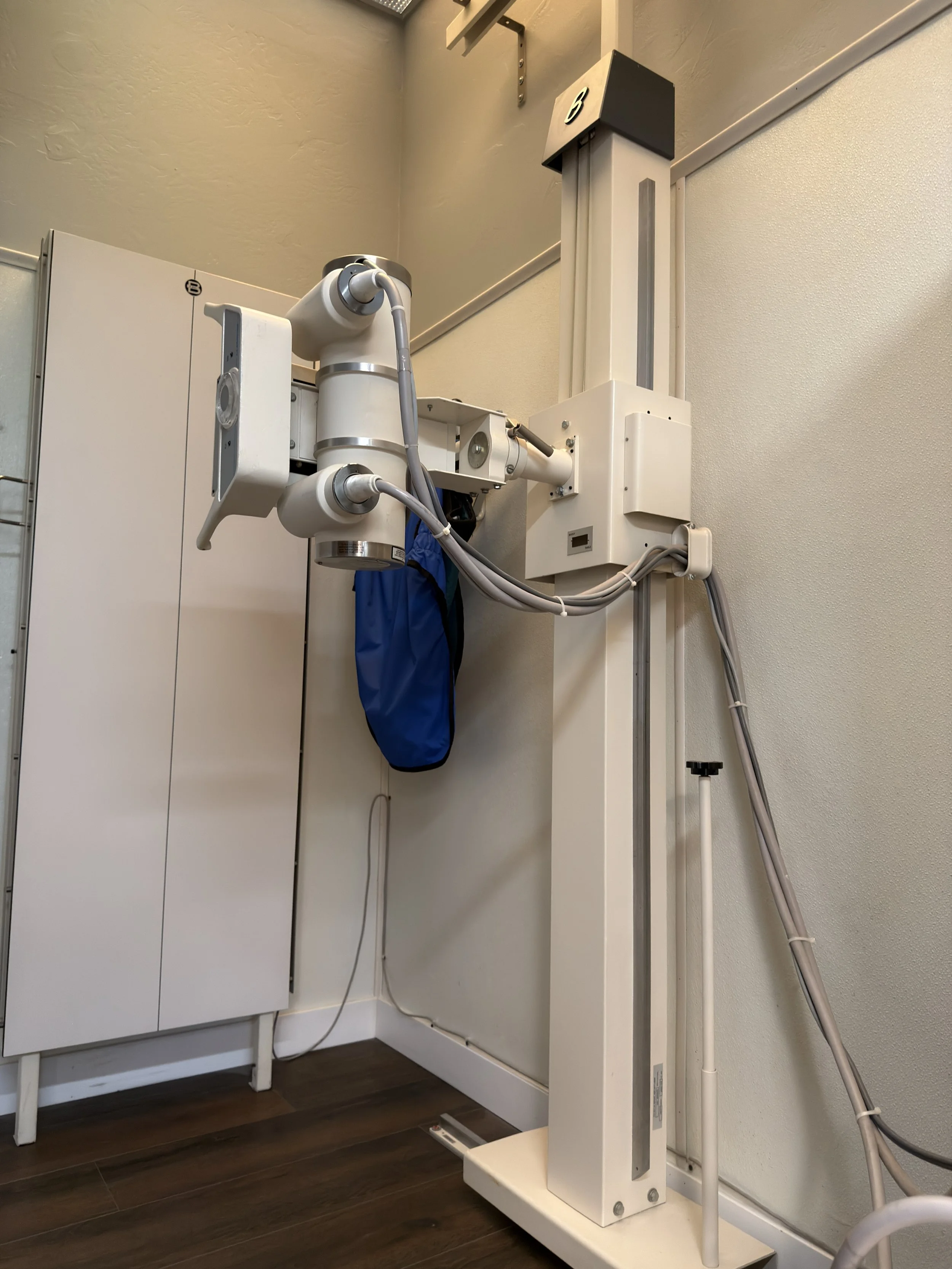
When you visit Biophysics Chiropractic, Dr. Conn can evaluate more than just the spot where you feel discomfort. Depending on your situation, an evaluation may consider:
- Your health and symptom history
- Daily activities
- Work or desk habits
- Postural positioning
- Range of motion
- Movement patterns
- Spinal alignment
- A musculoskeletal examination
- A posture analysis
- Imaging when clinically appropriate (X-rays)
If imaging is clinically appropriate, Dr. Conn will explain why it is being recommended. Not every patient needs X-rays.
See Your Posture From a Different Perspective
You see yourself in the mirror every day, which makes gradual changes in posture easy to miss. A professional evaluation can help identify patterns that are hard to recognize on your own.
At Biophysics Chiropractic, the focus is on you as an individual rather than trying to fit everyone into one predetermined posture model. Learn more about our posture analysis.
Posture Is a Whole-Body Idea
Posture assessment looks at relationships between multiple body landmarks—not just the position of your head.
From the side, a posture analysis often looks at how the ear, shoulder, hip, knee and ankle relate to one another. The head is just one part of the picture, which is why Dr. Conn looks at the whole body rather than only the neck.
The vertical line in the illustration is a simple reference guide, not a rule that everyone must match. Healthy bodies come in many shapes and alignments.
Can Chiropractic Care Help With Forward Head Posture?
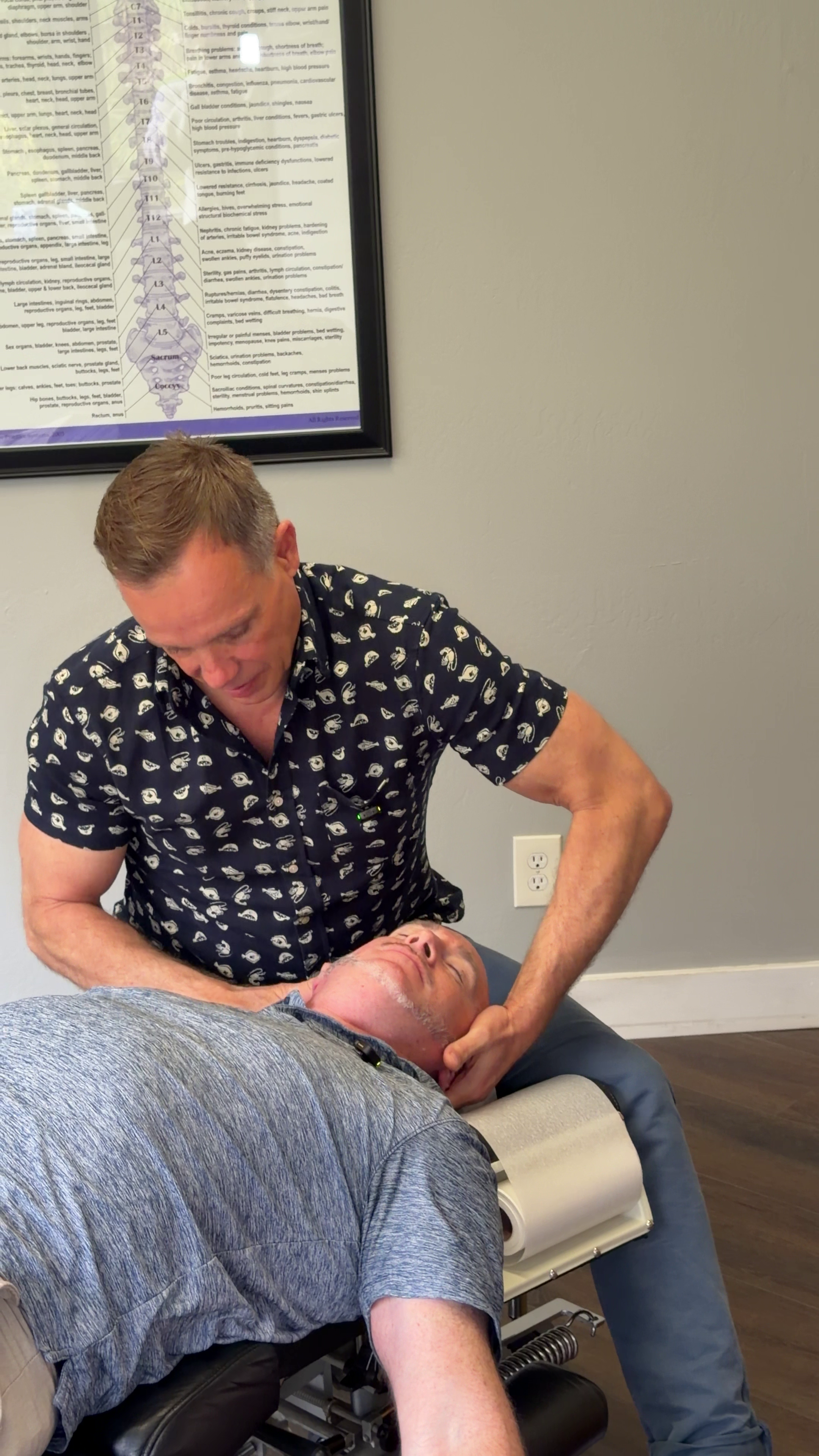
There's no one-size-fits-all solution for posture, so the honest answer is: it depends on the individual. Depending on your examination findings, a plan of chiropractic care may include combinations of:
- Chiropractic adjustments
- Corrective care strategies
- Mobility work
- Postural exercises
- Ergonomic recommendations
- Movement recommendations
- Lifestyle education
- Ongoing reassessment
Dr. Conn's recommendations depend on what he finds during your evaluation and what goals you have for your care. Chiropractic care isn't presented as a guaranteed or permanent fix. The aim is to help you understand your options.
Curious what a plan could look like for you?
Talk With Dr. Conn About Your PostureYou Don't Need Perfect Posture
“The best posture isn't necessarily one position you hold all day. Our bodies are designed to move.”
The goal isn't to sit rigidly upright every second. Good musculoskeletal health is about movement, variety, physical capacity and positions that work well for you as an individual. A modern approach to posture is less about stiff perfection and more about moving well and feeling good in your everyday life.
A Posture Evaluation May Be Worth Considering If…
- You notice your head sitting forward in photos
- You spend most of your day at a computer
- You're frequently looking down at a phone
- You experience recurring neck or upper-back tension
- You're concerned about rounded shoulders
- You're working on improving your posture
- Your posture seems to have changed over time
- You're simply curious about how your body is aligned
You don't have to be in severe pain to ask questions about your posture.
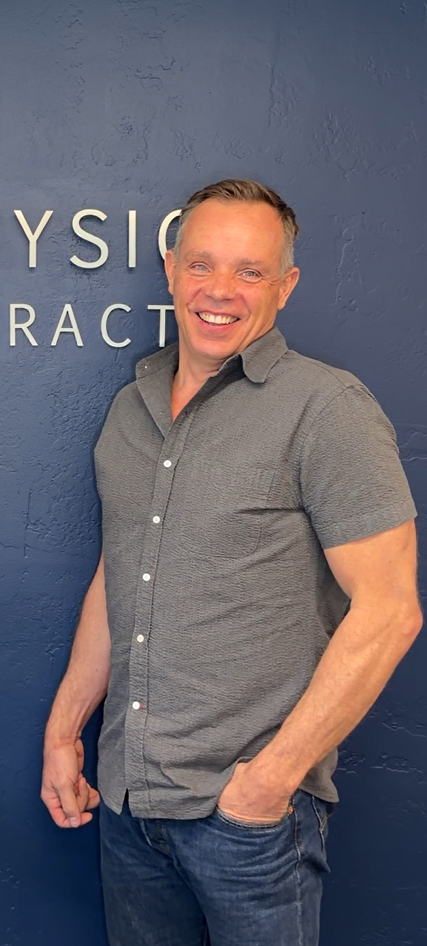
Meet Dr. Conn
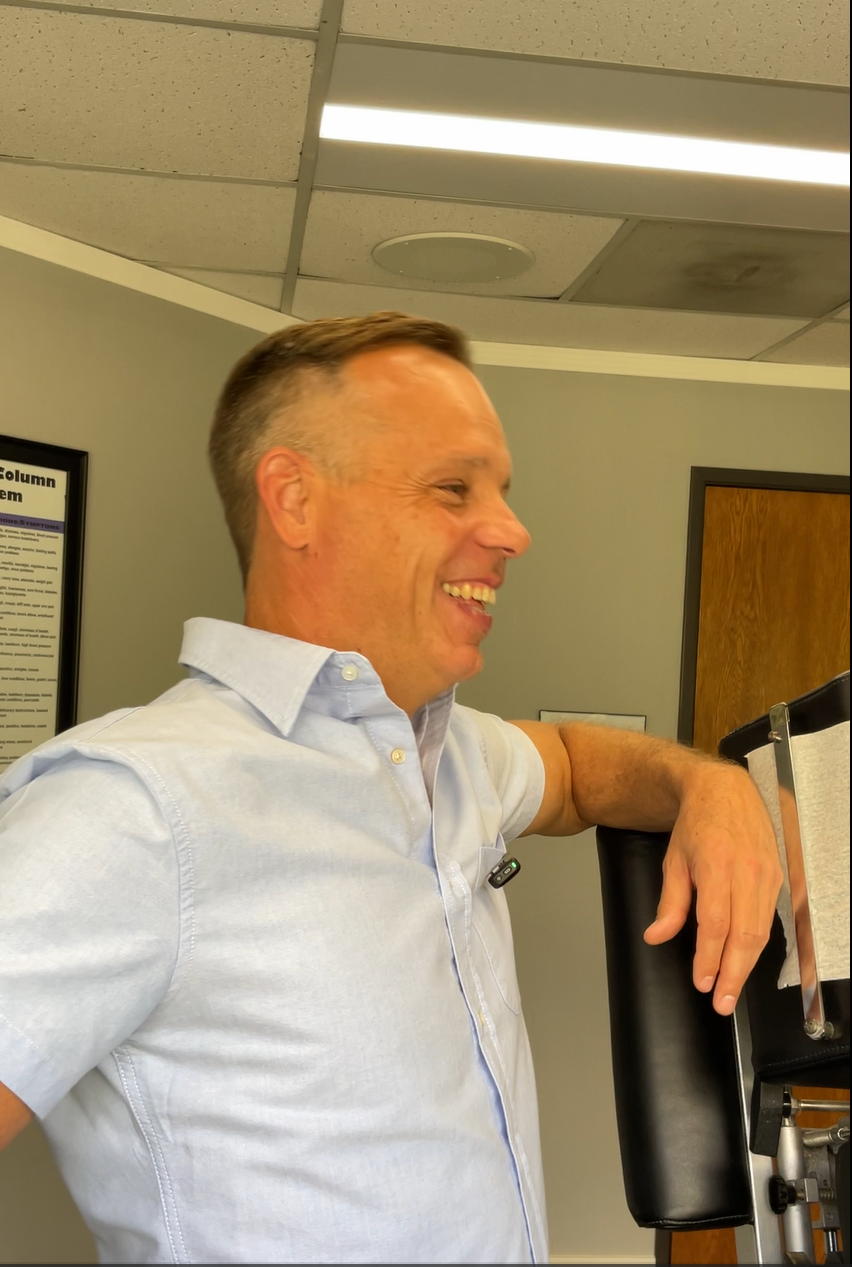
Dr. Conn is the chiropractor at Biophysics Chiropractic in San Diego. Patients can expect an approachable, educational style, with a goal of helping you better understand what is happening with your body so you can make informed decisions about your care.
Whether you're a student, a busy professional, a parent or simply curious about your posture, you're welcome to bring your questions. Learn more about Biophysics Chiropractic or see what to expect as a new patient.
Forward Head Posture: Frequently Asked Questions
Straightforward answers to what San Diego patients ask most about forward head posture and posture correction.
What is forward head posture?
Forward head posture is a position where the head rests farther forward than ideal relative to the shoulders. Instead of sitting roughly above the shoulders, the ear sits ahead of them when viewed from the side. It's very common, often linked to everyday habits like phone use and desk work, and it doesn't automatically mean something is wrong.
How do I know if I have forward head posture?
A simple clue is a side-view photo: if your ear sits noticeably ahead of your shoulder, your head may be positioned forward. Other things people notice include rounded shoulders, neck stiffness or feeling like they constantly need to straighten up. These are only general observations, not a diagnosis. A posture analysis with Dr. Conn can give you a clearer picture.
Is forward head posture the same as text neck?
They're closely related. “Text neck” is a popular, non-medical term for posture associated with looking down at phones and devices for long periods. Forward head posture is the broader description of where the head sits relative to the shoulders, and it can develop from many activities, not just phone use.
Can using a phone cause forward head posture?
Phone use may contribute, but it's rarely the only factor. Posture is shaped by many things, including desk setup, driving, studying, physical conditioning and daily habits. Spending long periods in one position without movement or variety is often a bigger issue than the phone itself. Raising your screen closer to eye level and taking regular movement breaks are helpful general habits.
Can a chiropractor evaluate forward head posture?
Yes. A chiropractor can evaluate posture as part of an examination. At Biophysics Chiropractic in San Diego, Dr. Conn can look at your history, daily activities, posture, range of motion and movement patterns, and may consider imaging when it is clinically appropriate. Your recommendations depend on your examination and findings.
Can forward head posture be corrected?
Posture can often change over time, but results depend on many factors, including your habits, physical condition, past injuries and individual anatomy, and no outcome can be guaranteed. Because everyone is different, an individual assessment is important. Dr. Conn can explain what he finds and discuss realistic options, which may include chiropractic adjustments, exercises, ergonomic changes and lifestyle education.
Do I need X-rays for forward head posture?
Not everyone does. Whether imaging is appropriate depends on your history and examination findings. If Dr. Conn determines X-rays are clinically appropriate, he will explain why he is recommending them and what he hopes to learn.
Can forward head posture cause neck pain?
Posture may be one contributing factor for some people, but neck pain can have many causes, and not everyone with forward head posture has pain. Some people with forward head posture do report neck or upper-back tension. If you have ongoing neck pain, an evaluation can help look at the bigger picture. Seek prompt medical care for severe, sudden or worsening symptoms.
How long does posture correction take?
There's no universal timeline. Goals, daily habits, examination findings, physical condition and the type of care plan all differ from person to person. After your evaluation, Dr. Conn can discuss what to expect for your situation and reassess your progress along the way.
Where can I get my posture evaluated in San Diego?
You can have your posture evaluated at Biophysics Chiropractic in San Diego with Dr. Conn. You don't need to be in severe pain to ask questions about your posture. You can book a consultation, or see what to expect as a new patient first.
Still have questions? Bring them to your consultation.
Book a ConsultationWondering What Your Posture Looks Like?
You don't have to diagnose yourself from a photo or spend hours searching online. Let Dr. Conn evaluate your posture, listen to your concerns, and help you understand your options.
New to Biophysics Chiropractic? See What to Expect →
Biophysics Chiropractic | San Diego, California